
Chi siamo
Chi sono – Cosa trovi in BSC – Perché il Sud est è diverso
About me and BSC – Why the South East is different?
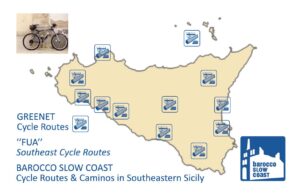
Leggimi! Read me!
Un avviso! Questo sito è nato nel 2012 e perciò …ha appena superato la pubertà! In questi giorni è stato rinnovato, si arricchirà di cose che ti faranno piacere se ami la Sicilia e gli itinerari fra i monti e le coste. Probabilmente troverai qualcosa che non va, puoi segnalarla, lo miglioreremo.
Just a heads-up! This website was launched in 2012, so… it’s only just come of age! It’s recently been revamped and will soon feature content that you’ll love if you’re a fan of Sicily and exploring its mountains and coastlines. You might spot a few glitches – please let us know, and we’ll sort them out.
Familiarizzare con il sito e i suoi contenuti è molto semplice. Quando fai click su ogni voce del menù appare un breve testo che ne illustra il contenuto. Visita le News … per conoscere le novità. Tutto qui!
Getting to know the site is very simple. When you click on each menu item, a short description appears explaining what it contains. Visit the News section … to find out what’s new. That’s all there is to it!
Ora passo a dirti chi sono, cosa contiene il sito e “che cosa è” il Sud Est Sicilia.
Now I’ll tell you a bit about myself, what the website contains, and what South-East Sicily is all about.
Mi chiamo Giampaolo Schillaci, sono nato il primo gennaio 1955. Dopo essere stato bambino, ragazzino, agricoltore e agronomo, oggi 25 marzo 2026 sono un professore dell’Università di Catania – Sicilia – Italia – in pensione da 5 mesi. Dopo i miei 14 anni è nato in me, in maniera inconsapevole, il desiderio di mettere insieme amici e passioni, dalla pallavolo alla speleologia, dalla costruzione di razzi (!) alla organizzazione di gruppi di giovani ricercatori e di conferenze sui temi della Sicurezza, Salute e Benessere negli Agrosistemi – Ragusa SHWA.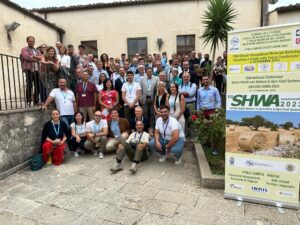
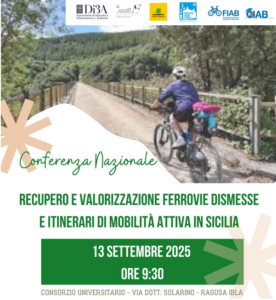
Ma anche conferenze nazionali sul cicloturismo.
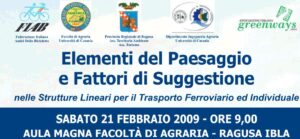
Un giorno stavo pedalando con amici su un tratto di ferrovia dismessa, ricordo perfettamente la curva sopraelevata che mi affascinò, e mi colpì il desiderio di condividere con altri ciò che colpiva e affascinava me. Da quel giorno decisi di impegnarmi nel recupero delle ferrovie dismesse con percorsi di mobilità lenta, o dolce o ancora “attiva”, come alcuni dicono adesso. Con il tempo la mia visione è diventata più chiara, e la mia missione è diventata quella di mettere insieme Persone, Posti, Idee, Azioni. Che ho perseguito anche nei miei anni di insegnamento e di ricerca, anni nei quali ho incontrato tanti Colleghi, e tantissimi Studenti, dai quali ho imparato tanto quanto ho trasmesso.
Da 20 anni vivo a Scicli, comune UNESCO più a sud d’Italia, fra il mare dello Stretto di Sicilia e l’altopiano dei Monti Iblei, dove si trova Ragusa, città capoluogo. Vivo la Sicilia e il Sud est dell’Isola con particolare soddisfazione e orgoglio. Anche perché, se tutta la Sicilia è uno scrigno di bellezze, il Sud est possiede una storia tutta sua che lo rende estremamente affascinante da visitare, da vivere e, ovviamente, da percorrere in bici e a piedi.
Dal 13 luglio 2023 ho ricevuto dall’Unità Operativa del sito UNESCO Città Tardo Barocche del Val di Noto delega per i progetti di Mobilità Dolce GREENET e FUA.
Più sotto trovi l’abstract di un articolo che spiega perché il Sud est Sicilia è differente dal resto dell’Isola. Troverai il link all’articolo completo, al momento solo in lingua Inglese.
My name is Giampaolo Schillaci; I was born on 1 January 1955. Having been a child, a teenager, a farmer and an agronomist, today, 25 March 2026, I am a professor at the University of Catania – Sicily – Italy – and have been retired for five months. From the age of 14, a desire to bring together friends and passions – from volleyball to caving, from building rockets (!) to organising groups of young researchers and conferences on the themes of Safety, Health and Wellbeing in Agrosystems.
But also conference on cycle tourism!
One day I was cycling with friends along a stretch of disused railway track; I remember perfectly the banked bend that captivated me, and I was struck by a desire to share with others what had struck and captivated me.
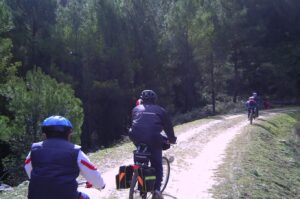
From that day on, I decided to dedicate myself to the restoration of disused railways, creating routes for ‘slow’ or ‘gentle’ mobility – or ‘active’ mobility, as some now call it. Over time, my vision has become clearer, and my mission has become to bring together People, Places, Ideas and Actions. This is something I have also pursued during my years of teaching and research, years in which I have met many colleagues and countless students, from whom I have learnt as much as I have taught.
I have been living in Scicli for 20 years, the southernmost UNESCO town in Italy, nestled between the waters of the Strait of Sicily and the Iblei Mountains plateau, where Ragusa, the regional capital, is situated. I experience Sicily and the south-east of the island with particular satisfaction and pride. This is partly because, whilst the whole of Sicily is a treasure trove of beauty, the south-east has a history all of its own that makes it extremely fascinating to visit, to experience and, of course, to explore by bike and on foot.
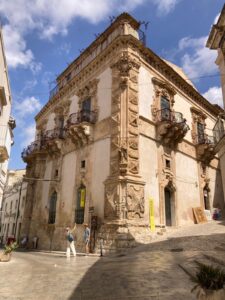
Palazzo Beneventano a Scicli, l’angolo più fotografato del Tardo Barocco
Palazzo Beneventano in Scicli, the most photographed spot of the Late Baroque period
On 13 July 2012, I was appointed by the Operational Unit of the UNESCO site ‘Late Baroque Towns of the Val di Noto’ to oversee the GREENET and FUA sustainable mobility projects
Now, you can read the abstract below of an article explaining why south-eastern Sicily is different from the rest of the island. At the end, you’ll find a link to the full article, which is currently available in English only
A Very Brief History of South east Sicily
Una storia molto breve della Sicilia sud orientale
Why South East Sicily is different from the rest part of Sicily?
Perché la Sicilia sud orientale è così diversa dal resto della Sicilia?
La Sicilia è più che un’isola, è un mondo nel mondo dell’Italia e del Mediterraneo. Tutta la Sicilia è ricca di monumenti di ogni epoca storica. Mille popoli si sono succeduti, si sono battuti per il possesso delle sue terre, dei suoi porti e persino delle sue donne. La Sicilia del Sud Est è un … altro mondo, il suo paesaggio è profondamente diverso dal resto dell’Isola e, forse, anche le sue genti, le persone che qui vivono e lavorano … proviamo a spiegare perché.
Sicily is more than an island, it is a magic world set in the astonishing world of Italy. All of Sicily is rich in monuments from every historical era. A thousand peoples followed one another, fought for the possession of his lands, of his ports and even of his women. The Sicily of the South East is another world, its landscape is deeply different from the rest of the Island and also the people who live and work here. Let’s try to explain why.
Quel terrificante evento mostrò le straordinarie capacità di resilienza di quel mondo, grazie alle quali capacità le città furono ricostruite con prodigi di architettura e urbanistica. Le abilità delle maestranze furono straordinarie e grazie a loro gli edifici di civile abitazione, i conventi e le chiese furono ricostruiti con arte e sapienza. Tre secoli dopo quella resilienza verrà riconosciuta degna di considerazione e dalla tragedia nacque il sito UNESCO Città tardo barocche del Val di Noto, un fiore straordinario dalle macerie di uno degli eventi più distruttivi della storia europea del mondo. Qui, nella Sicilia sud orientale.
That terrifying event showed the extraordinary resilience of that world, thanks to which the cities were reconstructed with architectural and urban planning wonders. The skills of the workers were extraordinary and thanks to them the civilian buildings, convents and churches were rebuilt with art and wisdom. Three centuries after that resilience will be recognized as worthy of consideration and the tragedy created the UNESCO Late Baroque site of Val di Noto Towns, an extraordinary flower from the rubble of one of the most destructive events in European history in the world. Here, in south-eastern Sicily.
giampaolo.schillaci@baroccoslowcoast.it
Click here to read the full paper with images of urban and countryside landscapes