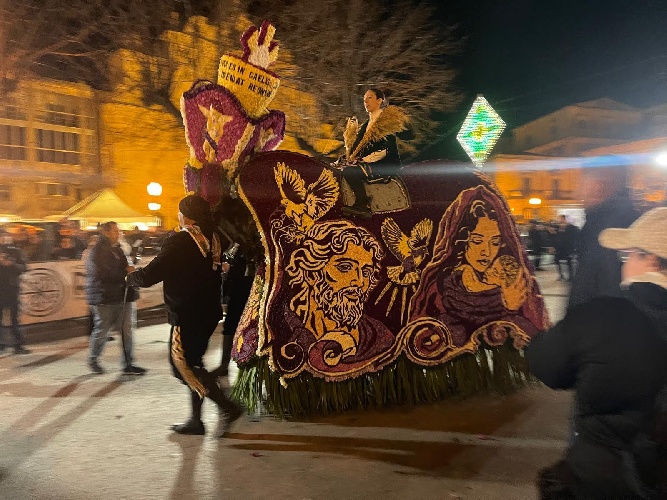
La Madonna delle Milizie o Madonna a Cavallo
La data. La ricorrenza della Madonna delle Milizie cade l’ultimo sabato di maggio. La festa è iscritta al Registro delle Eredità Immateriali della Regione Siciliana (R.E.I.)1.
Le Feste del R.E.I. a Scicli. Le manifestazioni Sciclitane inscritte al R.E.I.: Cavalcata di San Giuseppe, Settimana Santa, Pasqua di Resurrezione, Madonna delle Milizie, Canzoncine dell’Immacolata.
Che cosa è la festa della Madonna delle Milizie. La festa ricorda uno scontro armato fra Normanni e Arabi sbarcati nella spiaggia di Donnalucata, accaduto nel 1091 e risolto a favore dei primi grazie alla comparsa della Madonna a Cavallo, che partecipa attivamente alla battaglia, unica Madonna guerriera della Cristianità. Notare che tradizionalmente gli Arabi venivano appellati “Turchi””
Eventi Collaterali. In concomitanza della Festa viene allestito un attraente mercatino di prodotti artigianali. Inoltre, quasi tutti gli anni vi è anche la Sagra delle Teste di Turco, dolce tipico sciclitano per eccellenza, con evidente riferimento proprio alla battaglia che ispira la festa. La Testa di Turco ha forma di turbante arabo, ripiena di crema pasticciera o ricotta vaccina dolce, viene consumata al termine della festa, al termine della rievocazione teatrale. La Testa di Turco si può definire “il trofeo dei vinti”, perché realizzato dai vinti e non dai vincitori, ovvero quegli arabi che introdussero le pratiche dolciarie nei territori che cadevano sotto il loro dominio e dunque anche in Sicilia. In ogni caso, si trova tutto l’anno nelle migliori dolcerie.
Our Lady of the Militia
The Feast usually falls the last Saturday of May – Location: In the city center
The date. The recurrence of the Madonna of the Militia falls on the last Saturday of May. The Feast is registered in the Intangible Heritage List of the Sicilian Region (R.E.I.).
Scicli and the Intangible Heritage List. They are: Cavalcade of St. Joseph, Easter Holy Week , Easter Sunday, Our Lady of the Militia, The Immaculate Conception folk songs.
What is the feast of Our Lady of the Militia. The festival recalls an armed clash between the Normans and Saracens (Arabs) occurred in 1091 and resolved in favor of the first thanks to the appearance of the Virgin Mary on Horseback, who participated in the battle: the only Madonna warrior of Christianity. Note that in Sicily the Saracens were currently named “Turks”.
Collateral Events. In conjunction with the festival is set up an attractive market of handicrafts. In addition, almost every year there is also the Feast of “Heads of Turks”, typical Scicli cake par excellence, with its obvious reference to the battle that inspired the festival. The Head of Turks has shaped turban Arabic, filled with custard or ricotta cheese cake, is consumed at the end of the play. The Head of Turks can be defined as “trophy of defeated”, because made by losers (and not by winners). In facts, Arabs introduced confectionery in the territories that fell under their rule and therefore also in Sicily. In any case, is all year round in the best cake’s shops.
The Feast. In 1736, the Sacred Congregation of Rites decided that the Feast of the Blessed Virgin Mary of the Militia, a moveable feast time, were to be celebrated on Saturday before Passion Sunday. According to a widespread tradition, observed by several authors of historical works and religious, fifteen days before the Passover of 1091 would be held, on the marina of Scicli, a clash between Roger the Norman and the Emir Belcane, miraculously resolved in favor of the Christians for the intervention of the Virgin. While the Great Count Roger de Hauteville and the Norman Captain inspect the fortress of Castle in Scicli, comes the news of the fighting on the coast between local people and Saracens.
A hermit tries in vain to convince the Emir Belcane to avoid bloodshed and King Roger must accept the fight with the words: “You want war? It is war!”. The victory is due to the Virgin Mary that descents from the heaven riding a white horse and takes part in the fighting, and thereforela “Madonna di Scicli” is the only real Lady Warrior of Christianity. The Normans win the battle and Roger and his Militia pay homage to the Virgin. An Angel in heaven singing the praises of Mary and the victory of the Christians.
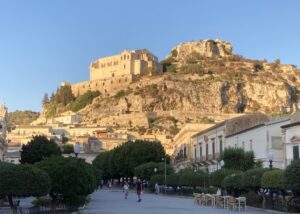
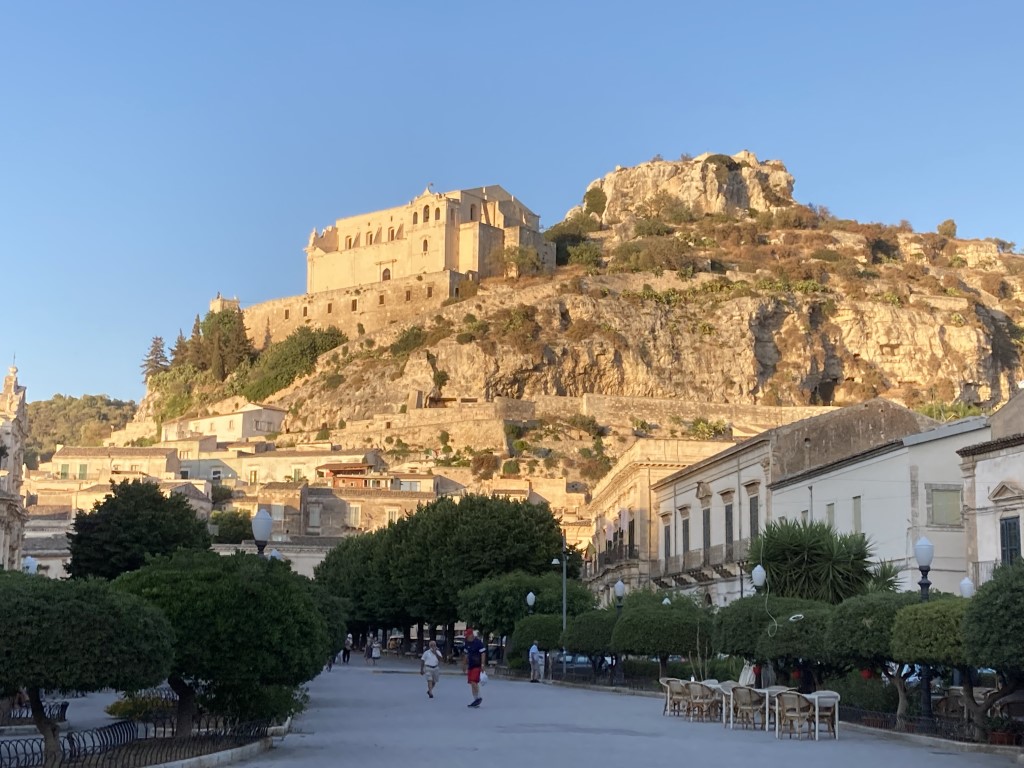
The places, the actors and scenes. A monumental stage is mounted at Italy Square (Piazza Italia), the most spacious of Scicli, surrounded by Baroque buildings and having on the left with the Church of St. William, patron of the city. Beyond the stage, on the hill, the Church of St. Matthew, recently restored, dominates the scene and is a splendidly seventeenth century wing. Although most times were hired famous actors to play the main parts, the issues that are most remembered are those in which participated actors and local characters, much loved by the audience.
There are many scenes that capture the viewer: the peroration of the Hermit, the declaration of war of King Roger, the arrival of the invaders on a large boat (that emerges from the streets behind), the descent from heaven of the Virgin Mary on Horseback, an event which precedes a few minutes the end of the performance. The costumes are from renowned theaters.
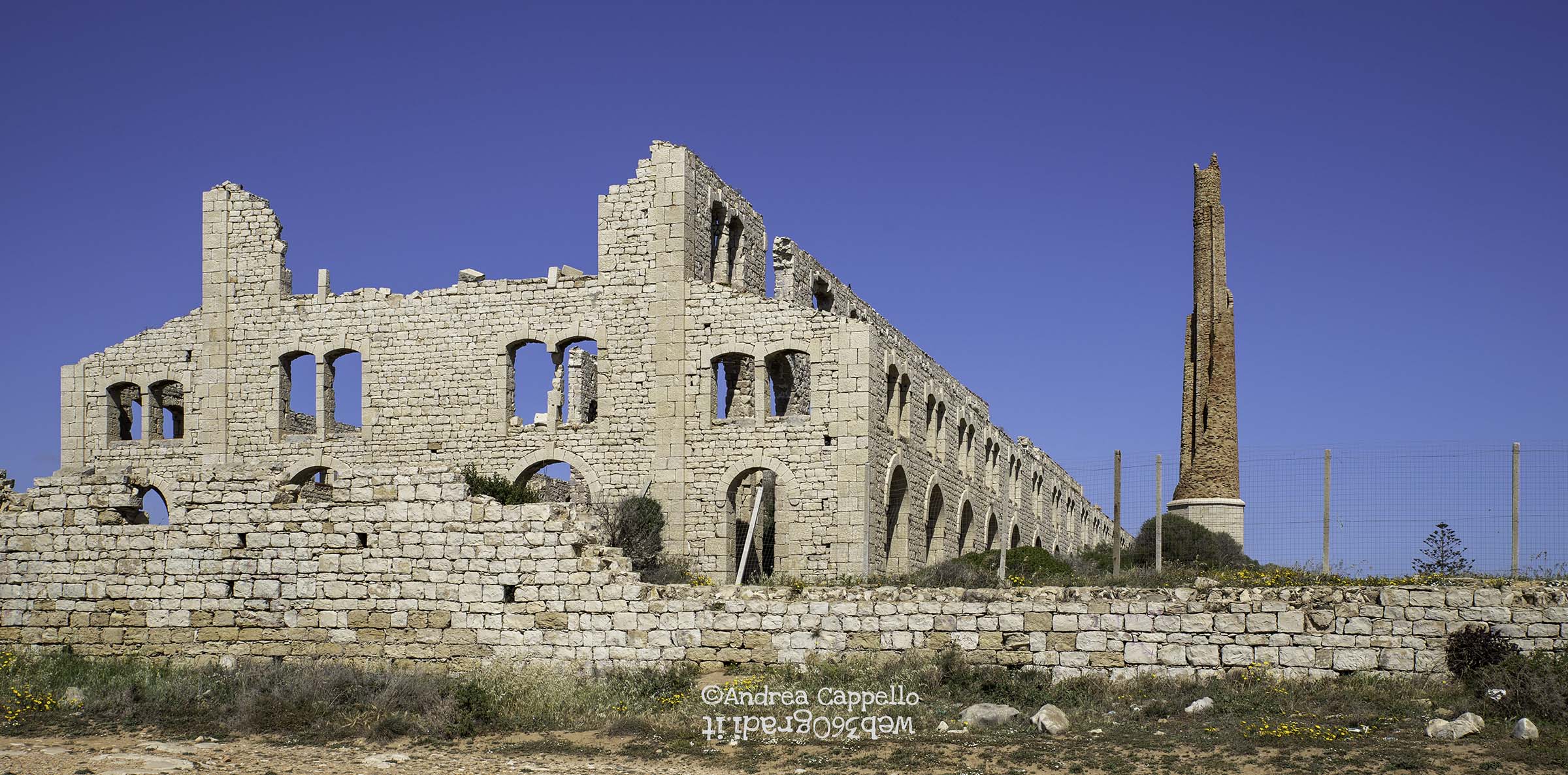
The Church of Our Lady of the Militia. To commemorate the victory against the Saracens in 1093 was built a votive church along the road between Scicli and Donnalucata, providing it with a tower in defense of any new incursions. The church was rebuilt and enlarged in 1391 and again in 1721 by the priest Paul Sammito. The main arch of the new church was painted the portrait of Sammito and was a plaque that reads the last words spoken by Our Lady on Horseback rushed to the defense of Scicli: … En adsum Civitas mea dilecta, protegam te dextera mea (“behold, I am here in my beloved city, I will protect you with my hand “). In the church is preserved the stone statue representing the Madonna and Child in her arms and is shown, on a stone, the paw print of the horse riding which was the Virgin, when he touched the ground.
Texts and Video
http://www.siciliainfesta.com/feste/festa_della_madonna_delle_milizie_scicli.htm
See how you do the heads of turkish
websitehttp://www.comune.scicli.rg.it/flex/cm/pages/ServeBLOB.php/L/IT/IDPagina/3329 (IT)
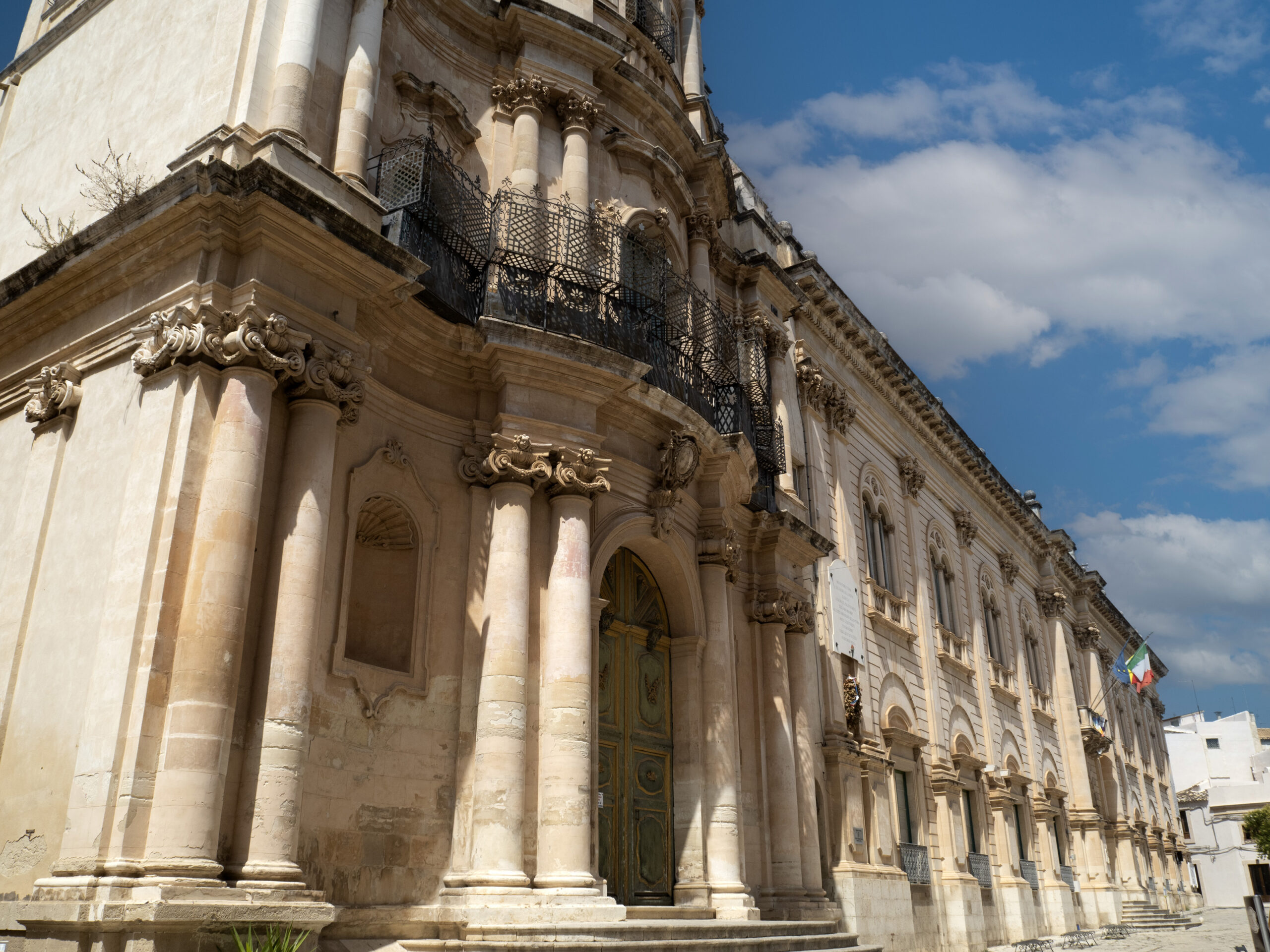
Please contact the Organizers calling the Municipal Office before planning a trip to Scicli to attend specific events. Venue: Palazzo Spadaro, via F. Mormina Penna – Tel. + 39 0932 839611
La Festa. Nel 1736 la Sacra Congregazione dei Riti decise che la festa di Maria Santissima delle Milizie, un tempo festa mobile, dovesse essere celebrata il Sabato prima della Domenica di Passione. Secondo una diffusa tradizione, riscontrata da diversi autori di opere storiche e religiose, quindici giorni prima della Pasqua del 1091 si sarebbe svolto, sulla marina di Scicli, uno scontro tra Ruggero il Normanno e l’Emiro Belcàne, miracolosamente risolto in favore dei Cristiani per l’intervento della Vergine. Mentre il Gran Conte Ruggero d’Altavilla e il Capitano normanno ispezionano la fortezza del Castello di Scicli, giunge la notizia del combattimento sulle coste sciclitane tra Sciclitani e Saraceni. Un eremita tenta di convincere l’emiro Belcane ad evitare
spargimenti di sangue e al re Ruggero non resta che dichiarare guerra con le parole: “Tu Vuoi guerra? E guerra sia!”. La vittoria si deve alla Vergine Maria che su un bianco cavallo partecipa al combattimento e che pertanto rappresenta l’unica vera Madonna Guerriera della cristianità.
I Normanni vincono la battaglia e Ruggero e le sue Milizie rendono omaggio alla Madonna. Un Angelo canta in cielo le lodi di Maria e la vittoria dei Cristiani.
I luoghi, gli attori e le scene. Un palcoscenico monumentale viene montato nella piazza Italia, la più spaziosa di Scicli, contornata da palazzi barocchi e dalla Chiesa di San Guglielmo, patrono della Città. La Chiesa di San Matteo, da poco restaurata, sovrasta la scena e costituisce una grandiosa quinta seicentesca. Anche se più volte si è fatto ricorso a bravi e famosi attori per ricoprire le parti principali, le edizioni che più vengono ricordate sono quelle nelle quali hanno partecipato attori e personaggi locali, molto amati dal pubblico, la cui recitazione è resa carica dall’atmosfera che sono un artista locale può respirare e restituire agli spettatori. Memorabile la dichiarazione di guerra di Ruggero, l’arrivo degli invasori su una grande barca che sbuca dalle vie retrostanti, la discesa dal cielo della Madonna a Cavallo, evento che precede di qualche minuto il termine della rappresentazione. I costumi provengono da rinomati teatri.
La Chiesa della Madonna delle Milizie. Per commemorare la vittoria contro i Saraceni nel 1093 fu costruita una chiesetta votiva lungo la strada fra Scicli e Donnalucata, dotandola di una torre a difesa di eventuali nuove incursioni. La chiesa venne ricostruita ed ampliata nel 1391 e ancora nel
1721 da parte del Sacerdote Paolo Sammito. Sull’arcata della nuova chiesa fu dipinto il ritratto del Sammito e fu posta una lapide che recita tra altro le ultime parole pronunziate dalla Madonna a Cavallo accorsa in difesa di Scicli:… En adsum Civitas mea dilecta, protegam te dextera mea (“Ecco, io sono qui nella mia amata città, io ti proteggerò con la mia mano”). Nella Chiesetta è conservato il simulacro di pietra che rappresenta la Madonna col Figlio in braccio e viene mostrata, sopra un sasso, l’impronta della zampa del cavallo della Vergine, quando toccò terra.
Testi (IT) e Video
http://www.siciliainfesta.com/feste/festa_della_madonna_delle_milizie_scicli.htm
video sulla manifattura della Testa di Turco
Testi: libera rimodulazione dal testo reperibile sul sito comunale
http://www.comune.scicli.rg.it/flex/cm/pages/ServeBLOB.php/L/IT/IDPagina/3329
Contattare l’Ufficio Comunale prima di programmare un viaggio a Scicli per assistere a specifici eventi. Sede: Palazzo Spadaro, via F.Mormina Penna – Tel. + 39 0932 839611